Senjokaku on Miyajima: A 1587 Hall and Its Ginkgo View
日本語版はこちら → https://ao-happy.net/senjokaku-miyajima-ginkgo-ja/
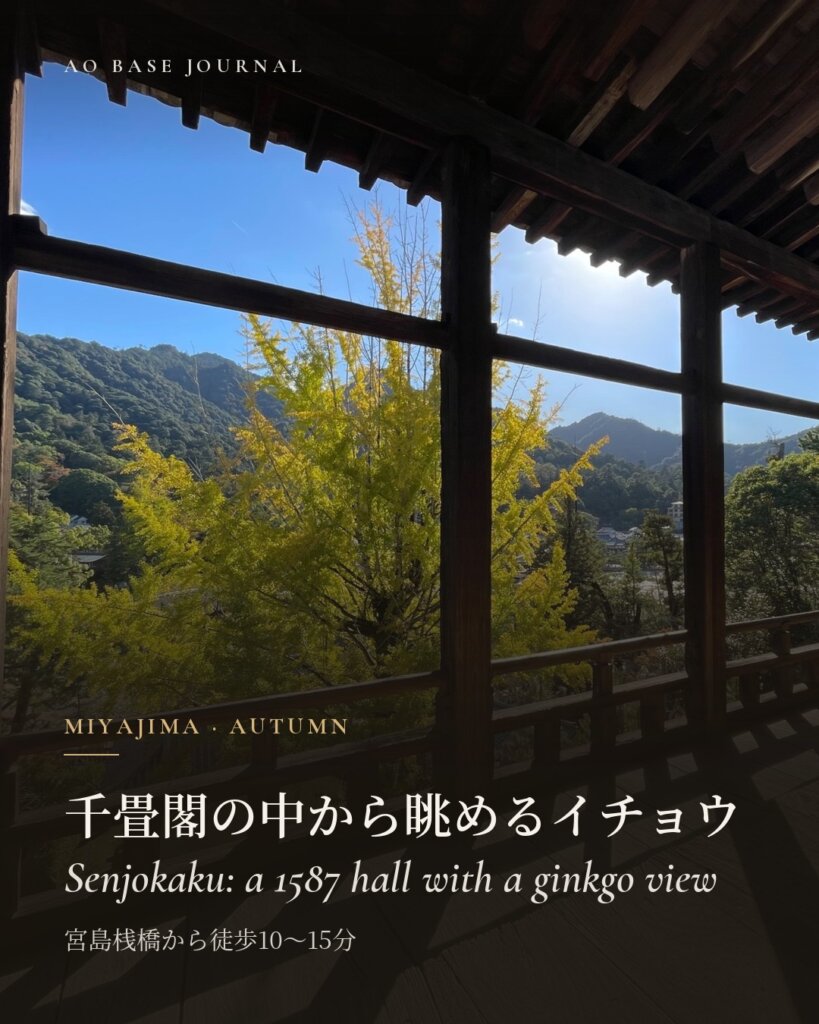
Most people who visit Miyajima walk straight to the floating torii and Itsukushima Shrine. But just up a short slope behind the shrine stands a huge wooden hall that many visitors miss: Senjokaku, the “Hall of a Thousand Tatami Mats.” I went there on November 7, when the ginkgo tree beside the hall was starting to turn yellow, and it was beautiful.
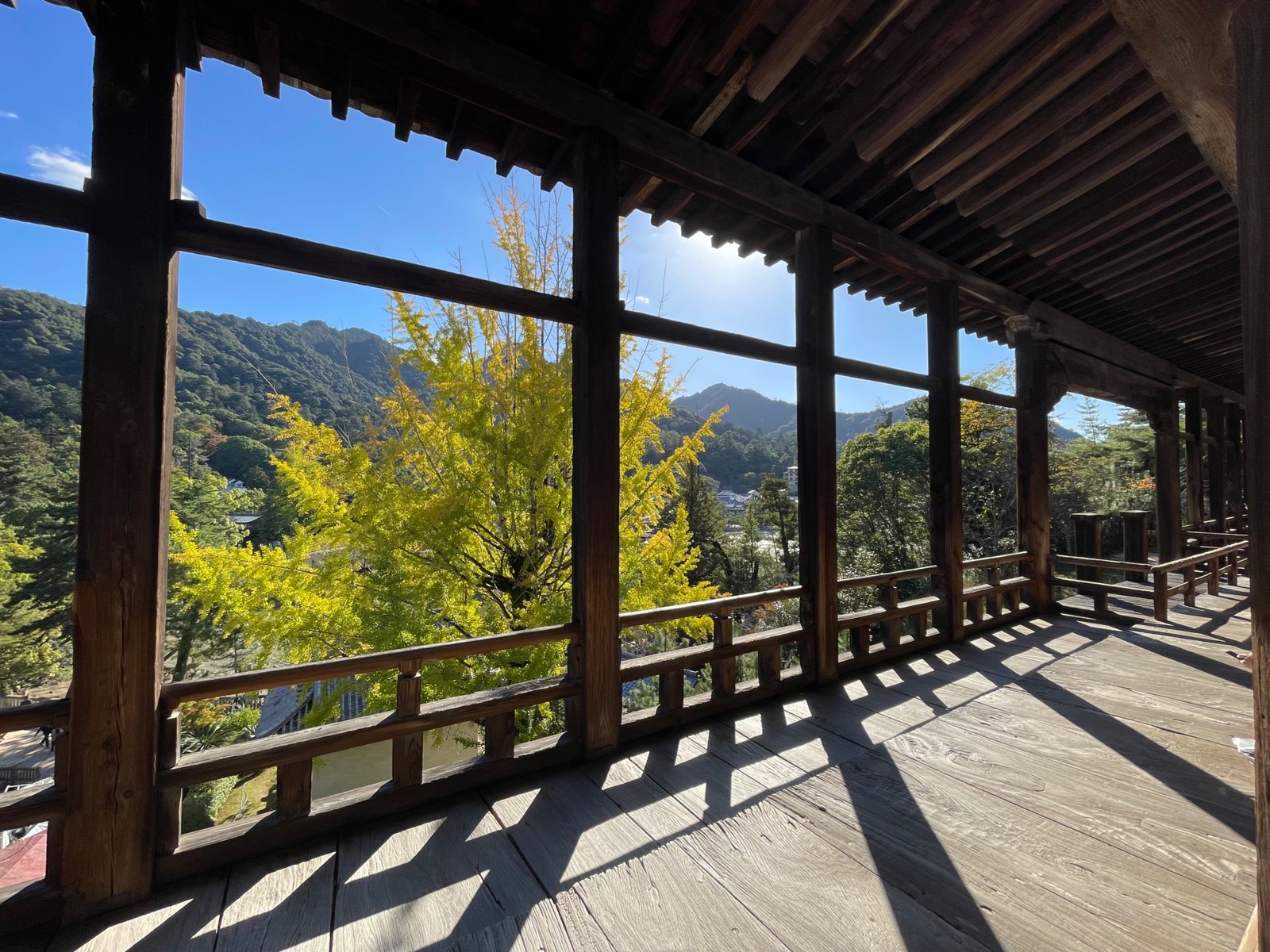
It’s only a short walk from Itsukushima Shrine. From inside the hall you can look out at the ginkgo and the mountains on one side, and at the sea on the other. The view is lovely, and it’s a place where you can spend some slow, quiet time.
What is Senjokaku?
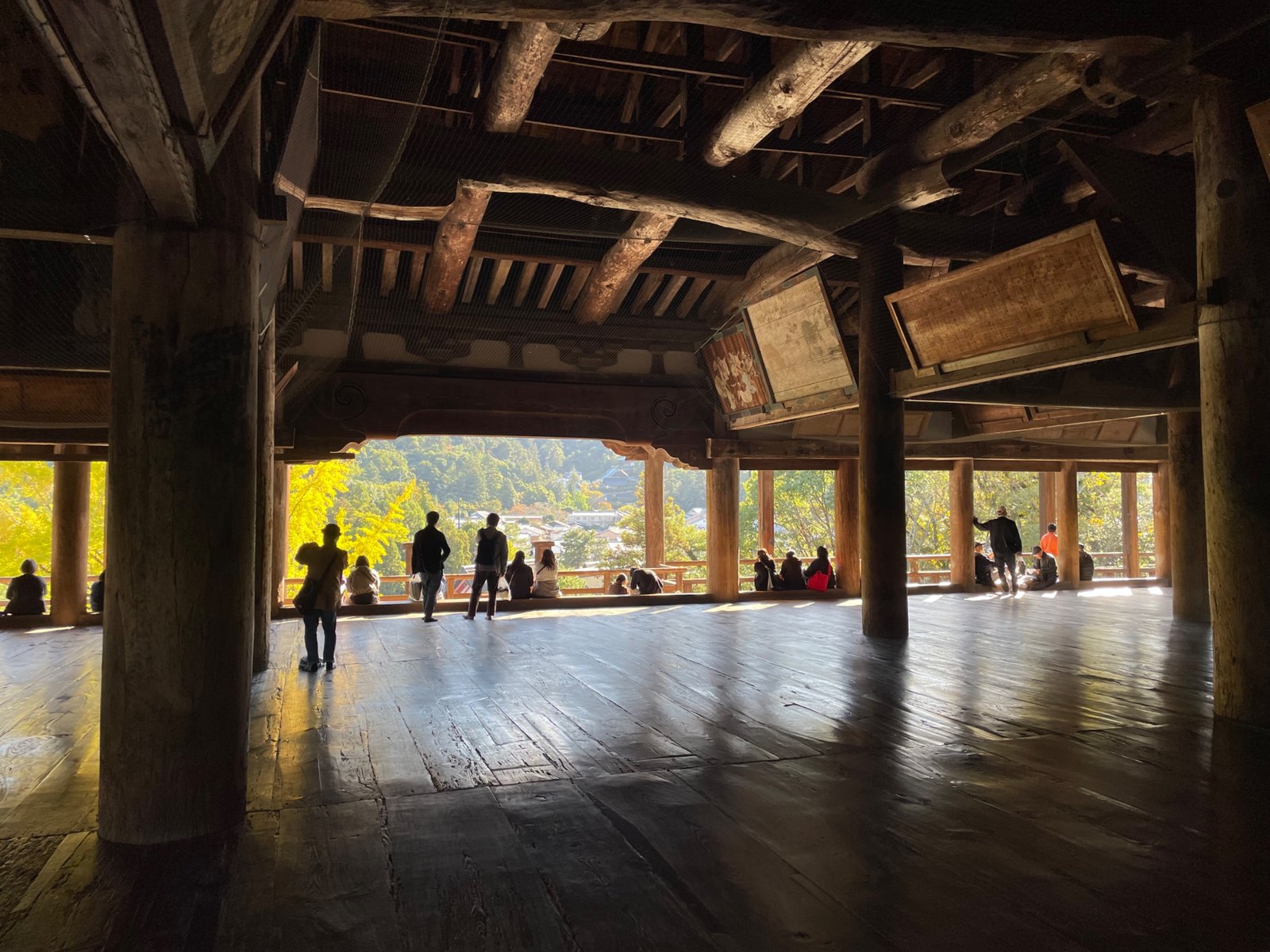
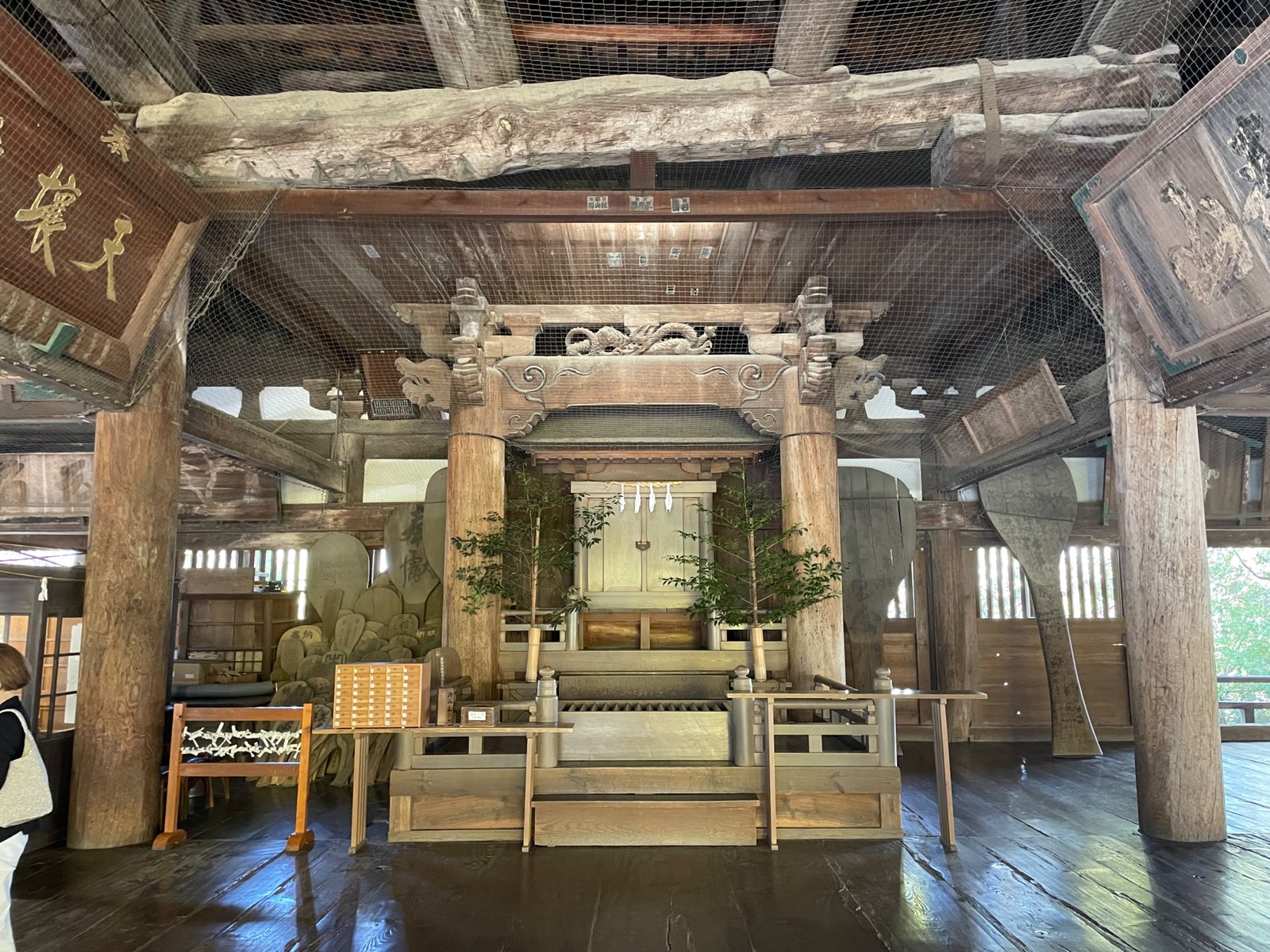
Senjokaku is the common name of Hokoku Shrine (also read Toyokuni Shrine). In 1587, the warlord Toyotomi Hideyoshi ordered a great hall to be built here for Buddhist sutra readings. Hideyoshi died in 1598 before the work was finished, and it was never completed. That’s why, even today, most of the hall has no board ceiling and no proper front entrance; you look straight up into the bare roof beams.
The floor is said to be the size of 857 tatami mats, which is where the nickname “thousand tatami” comes from. It is the largest wooden building on Miyajima. After the separation of Shinto and Buddhism in the Meiji era, the hall became a shrine dedicated to Hideyoshi. It was designated a National Important Cultural Property in 1910.
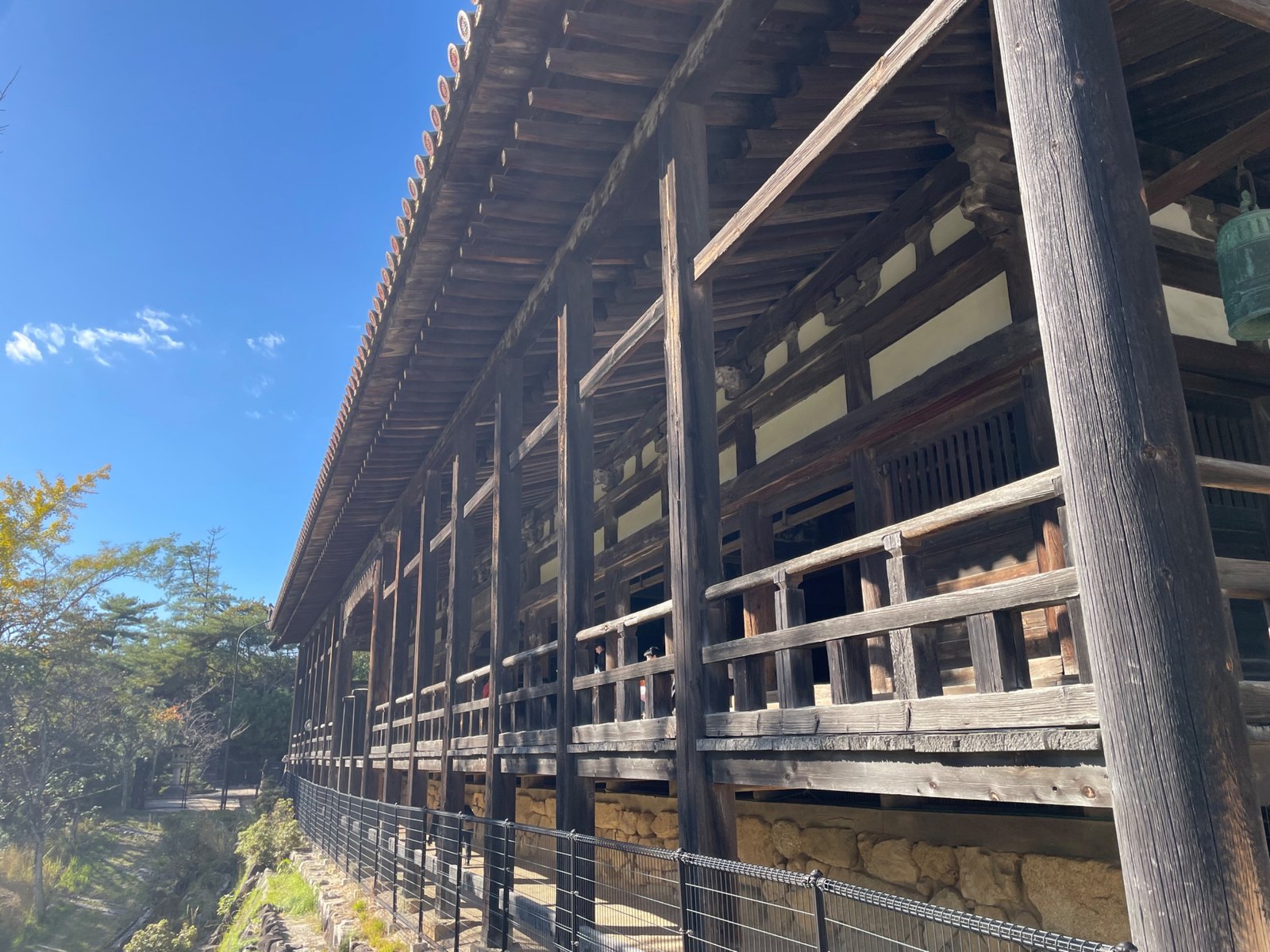
Unlike the bright vermilion of Itsukushima Shrine, Senjokaku is plain, unpainted wood. Because its building date is known, its weathering has even been used to estimate the age of other wooden buildings on the island.
What to see inside
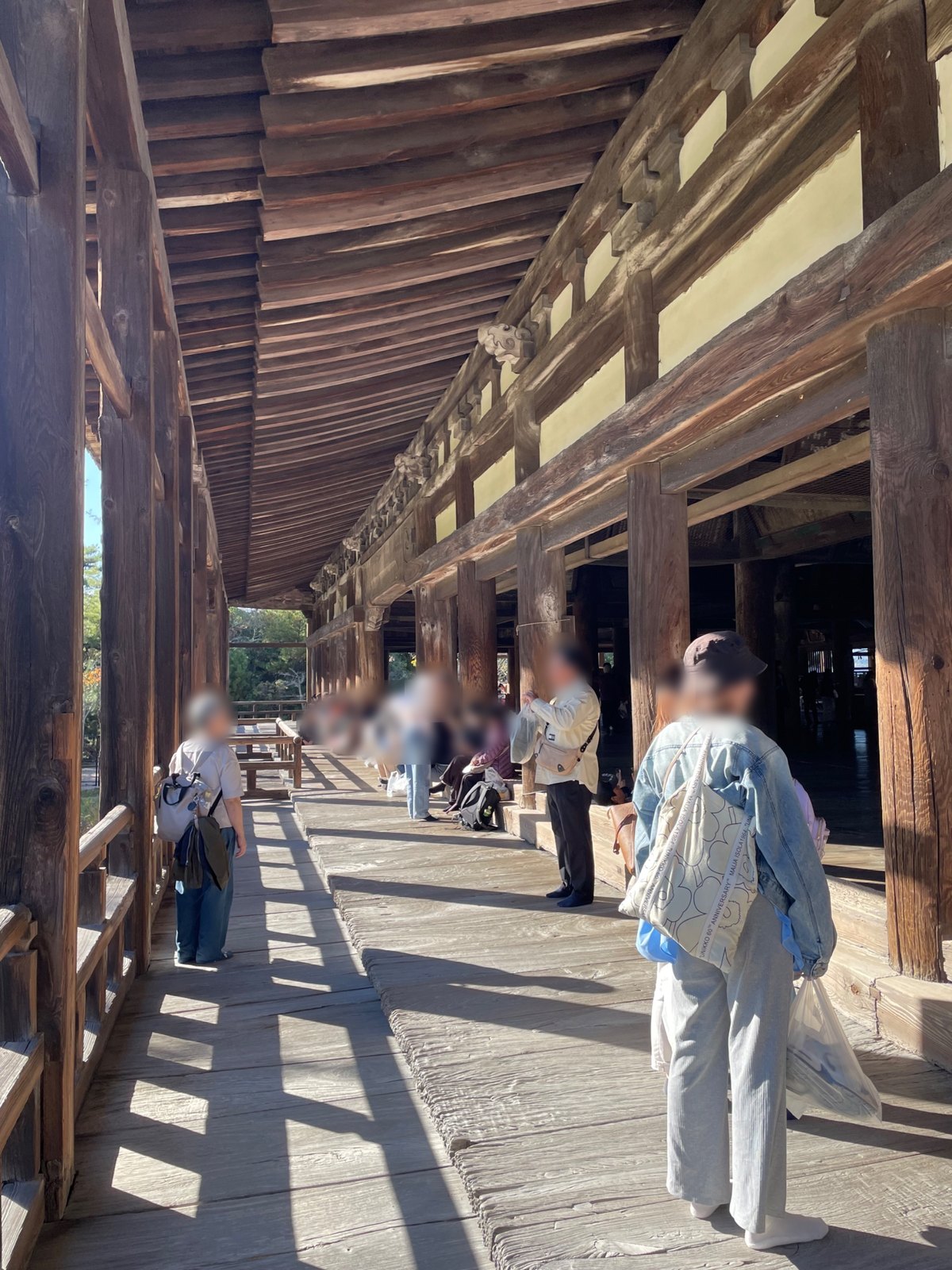
You take off your shoes and walk on the old, polished wooden floor. The hall is one huge open space with thick pillars, so it feels very different from a normal shrine. In autumn, the local tourist association calls the ginkgo here one of the highlights of the season, and the yellow of the leaves is reflected on the shiny floor.
Votive tablets and old graffiti
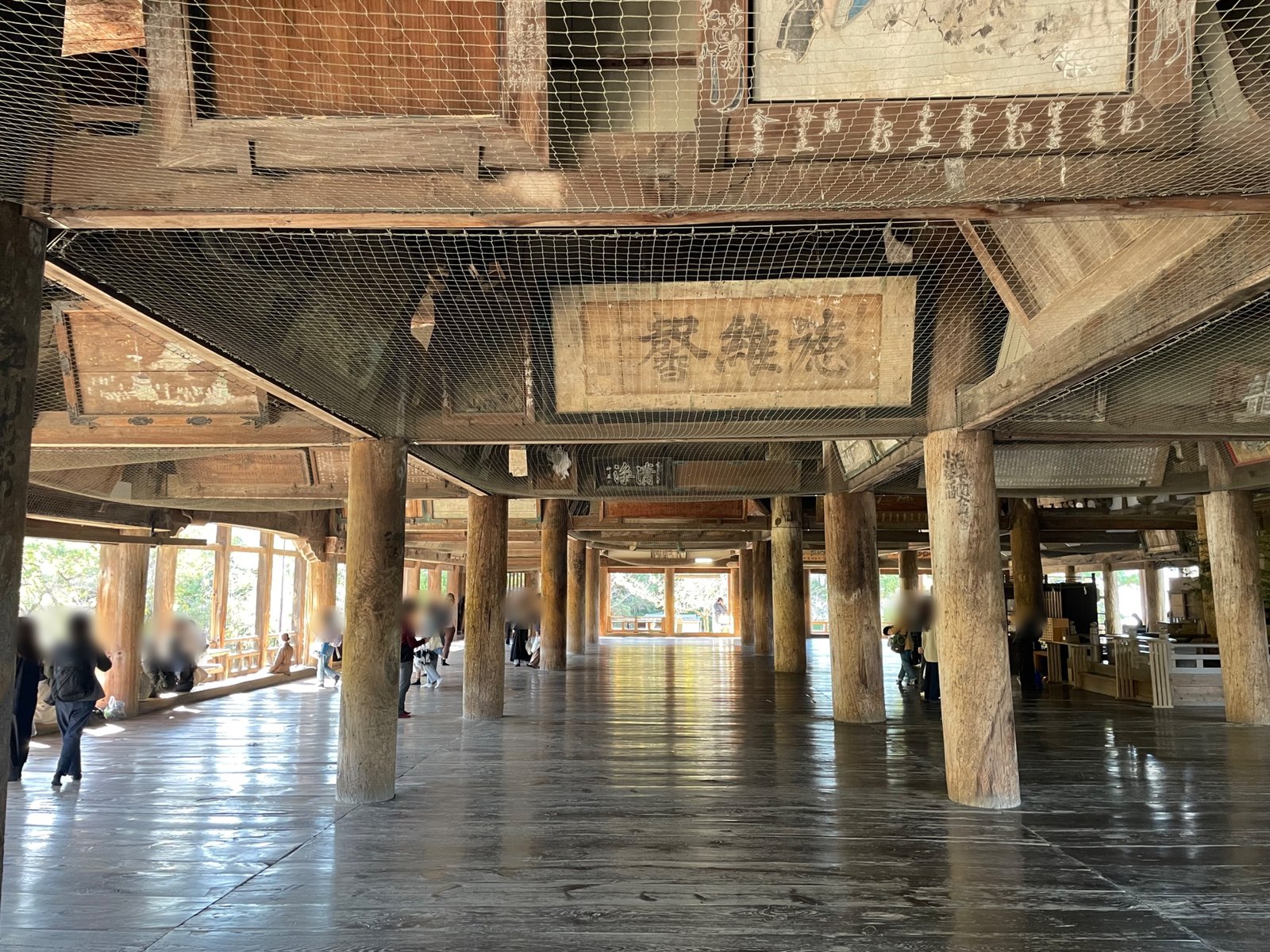
Large painted votive tablets (ema) hang from the beams, under protective netting. In the Edo period, people came to this hall to relax and enjoy the breeze, and you can still find old writing on the big pillars, such as the names of kabuki actors and short poems.
Views on both sides
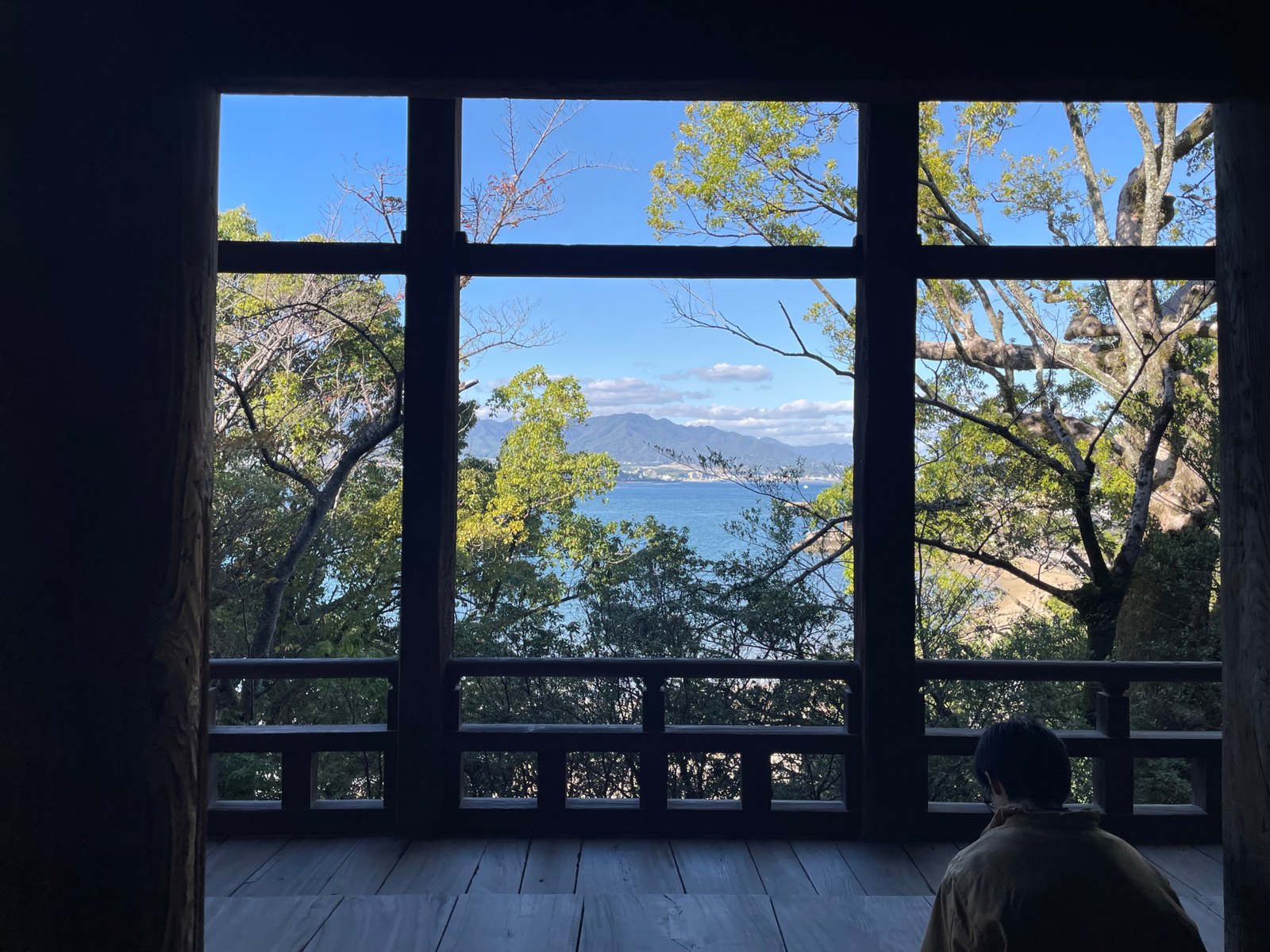
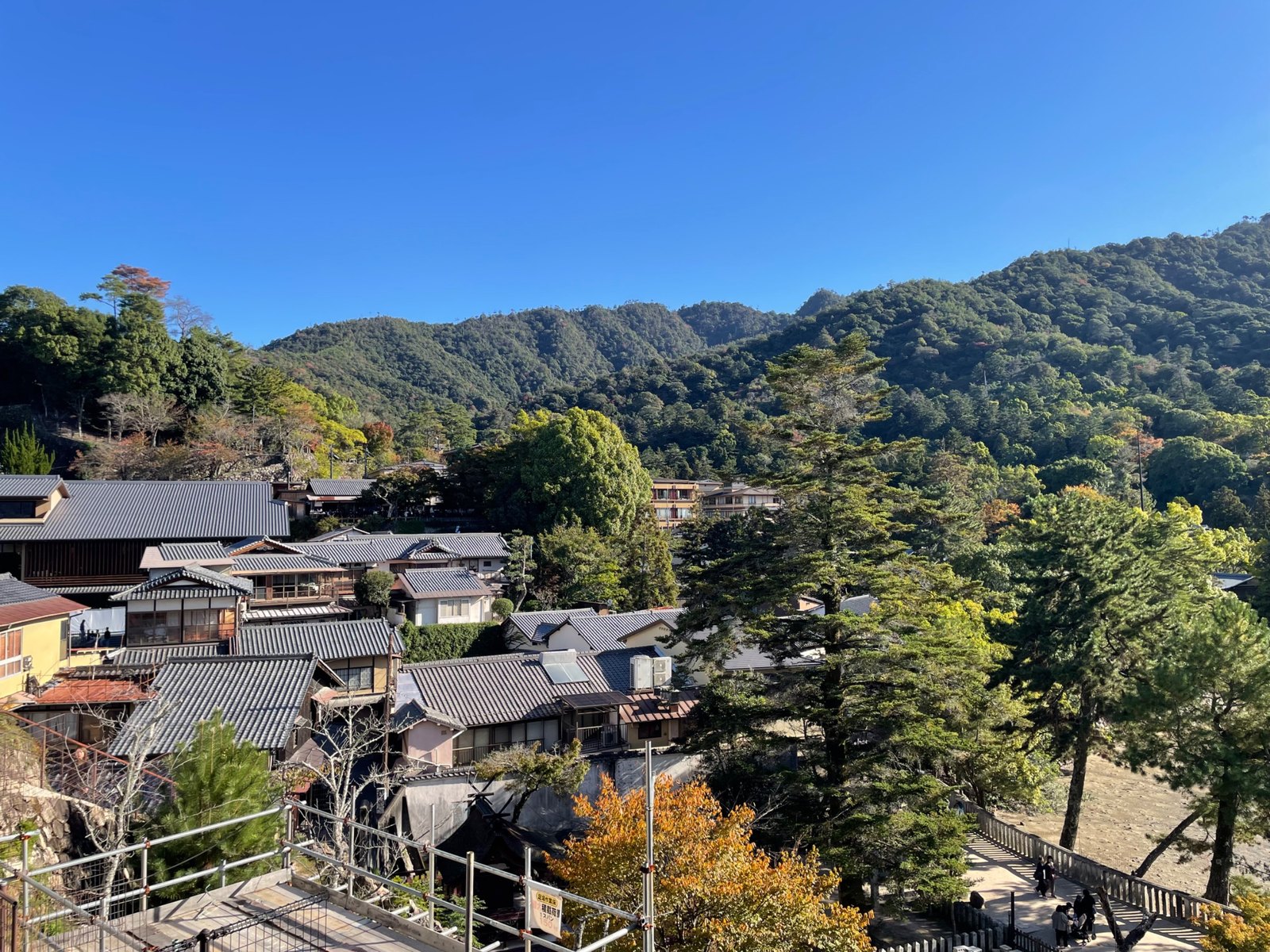
The hall stands on a small hill, and its sides are open, so you get views in two directions. On one side you see the ginkgo, the town of Miyajima and the mountains. On the other side you can see the sea.
Looking toward the island’s interior, the buildings on your left have many cafes. If you walk over to that area, you can have tea while enjoying a nice view.
Walk under the floor
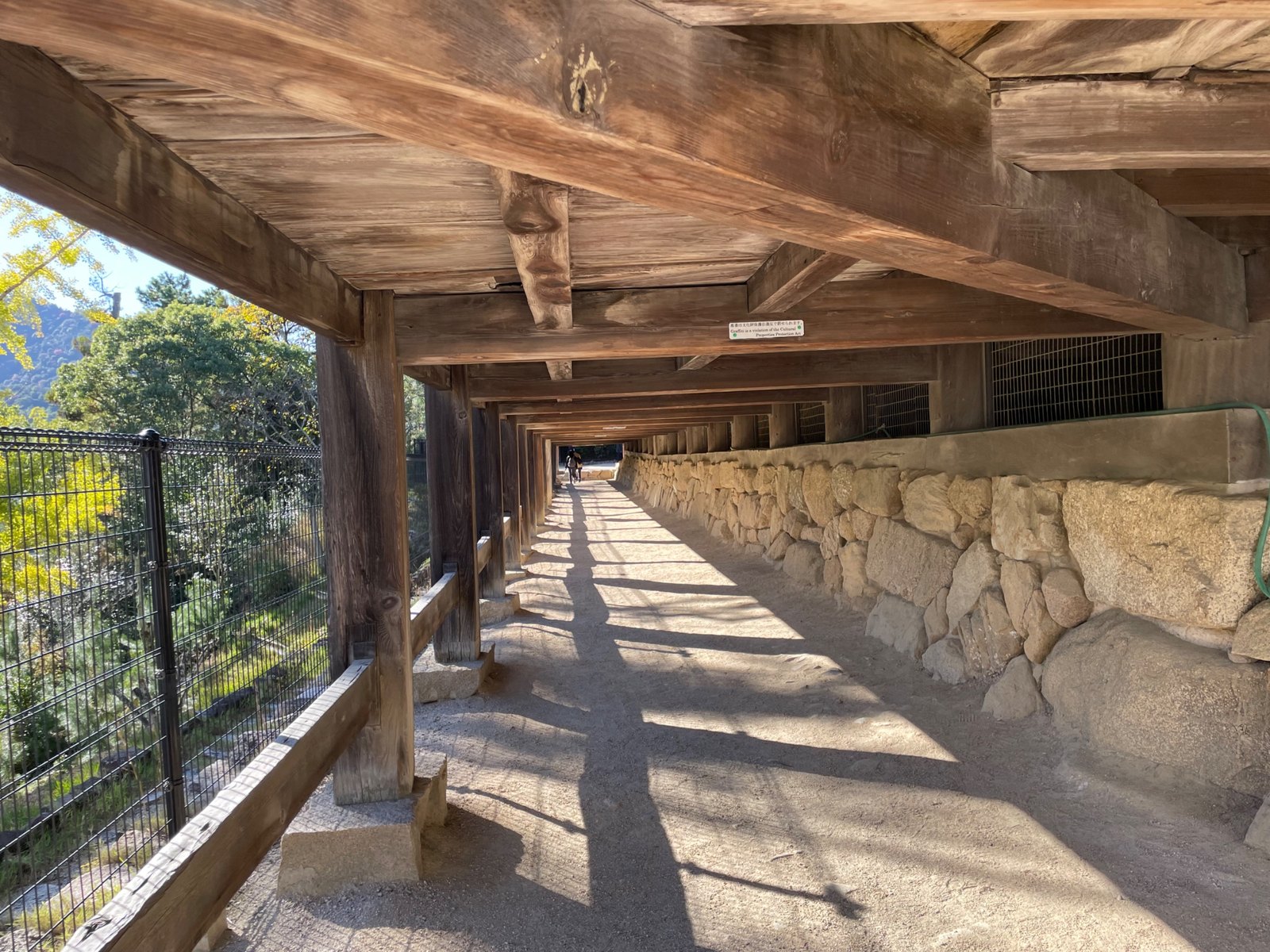
The space under the raised floor is also a passage you can walk through. Along the stone wall, with the thick wooden supports above you, you can see how this big building is held up.
When to see the ginkgo
I visited on November 7, 2026, and the ginkgo beside the hall was just starting to turn yellow, with some green still left. I think it turns fully yellow a little later in November. The timing of autumn colors changes a little every year, so if the ginkgo is the reason for your trip, check recent photos or the Miyajima Tourist Association before you go.
Visitor information
| Name | Senjokaku (Hokoku / Toyokuni Shrine) 豊国神社(千畳閣) |
| Address | 1-1 Miyajima-cho, Hatsukaichi, Hiroshima |
| Hours | 8:30–16:30 |
| Closed | Open every day |
| Admission | Adults and high school students 100 yen; elementary and junior high school students 50 yen (as shown on the sign at the entrance) |
| Walk from Miyajima Pier | About 10–15 min |
| Good to know | Shoes off inside the hall. The five-storied pagoda next to the hall is under restoration work planned to run until around 2027. |
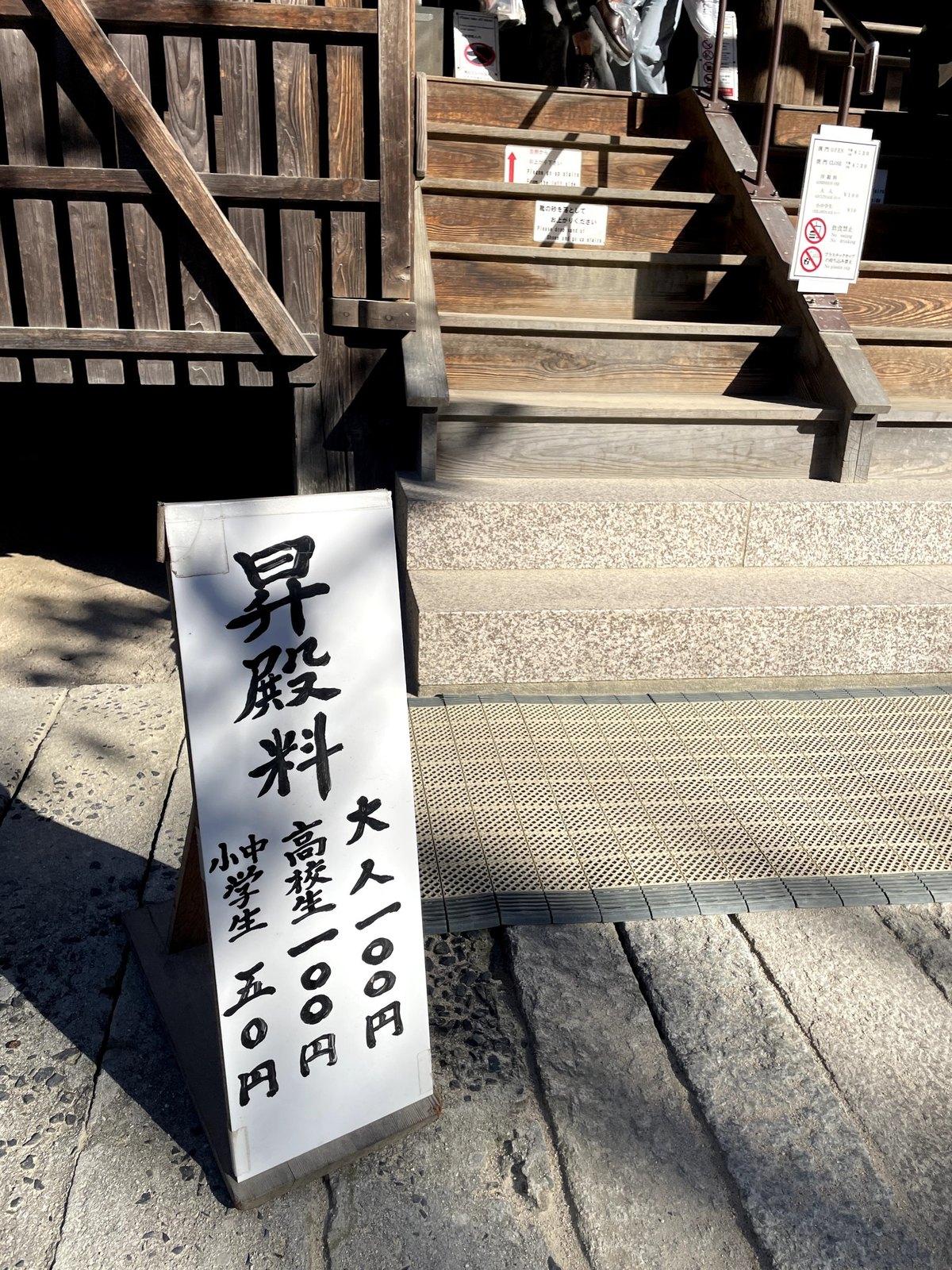
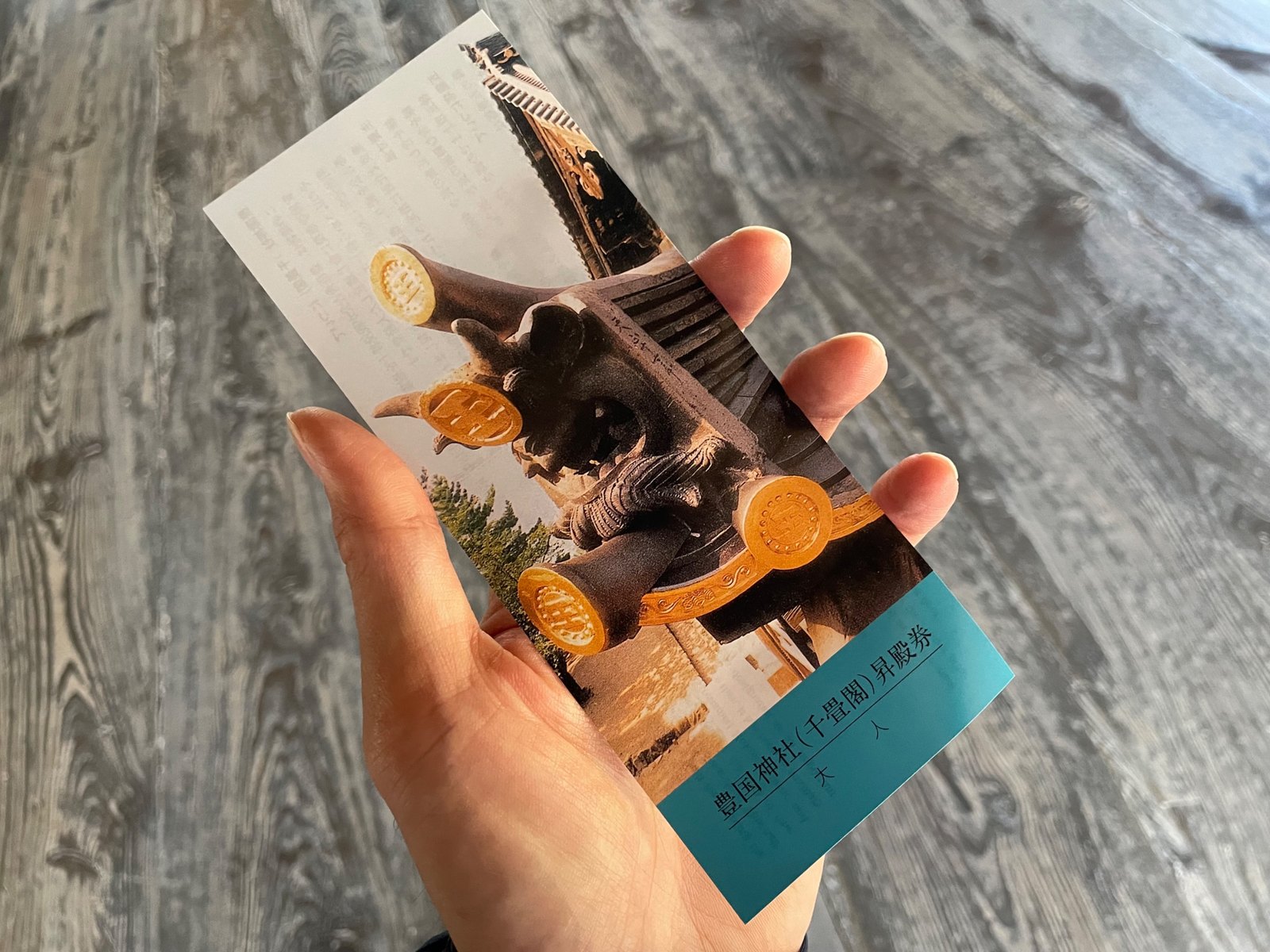
Hours and fees can change, so please check the latest information before you go.
Getting there
First take a ferry to Miyajima from Miyajimaguchi (about 10 minutes; JR Miyajima Ferry or Miyajima Matsudai Kisen). From Miyajima Pier, walk along the shore toward Itsukushima Shrine. Senjokaku is on the small hill just next to the shrine, about 10–15 minutes on foot from the pier. There is no parking at the site. A small visitor tax for Miyajima is added to the ferry fare.
From our inns
| Inn | Route | Approx. time |
|---|---|---|
| Ao’s Skyview Base (Koi) | 5 min walk to JR Nishi-Hiroshima → JR Sanyo Line to Miyajimaguchi → ferry (about 10 min) → 10–15 min walk | About 50–65 min |
| Ao’s Retreat Base (Ushita) | 6 min walk to Ushita-minami stop → 12 min to Hiroshima Stn by bus No.5 → JR Sanyo Line to Miyajimaguchi → ferry (about 10 min) → 10–15 min walk | About 80–95 min |
Times are estimates and do not include waiting for trains, buses or ferries.
On the way back: momiji manju
On the way back, I stopped at a momiji manju shop on the shopping street. Momiji manju are small maple-leaf-shaped cakes, Miyajima’s most famous sweet. This shop has many different fillings, and you can watch the manju being made inside the shop. This day I chose the pumpkin (kabocha) flavor to enjoy a taste of autumn.
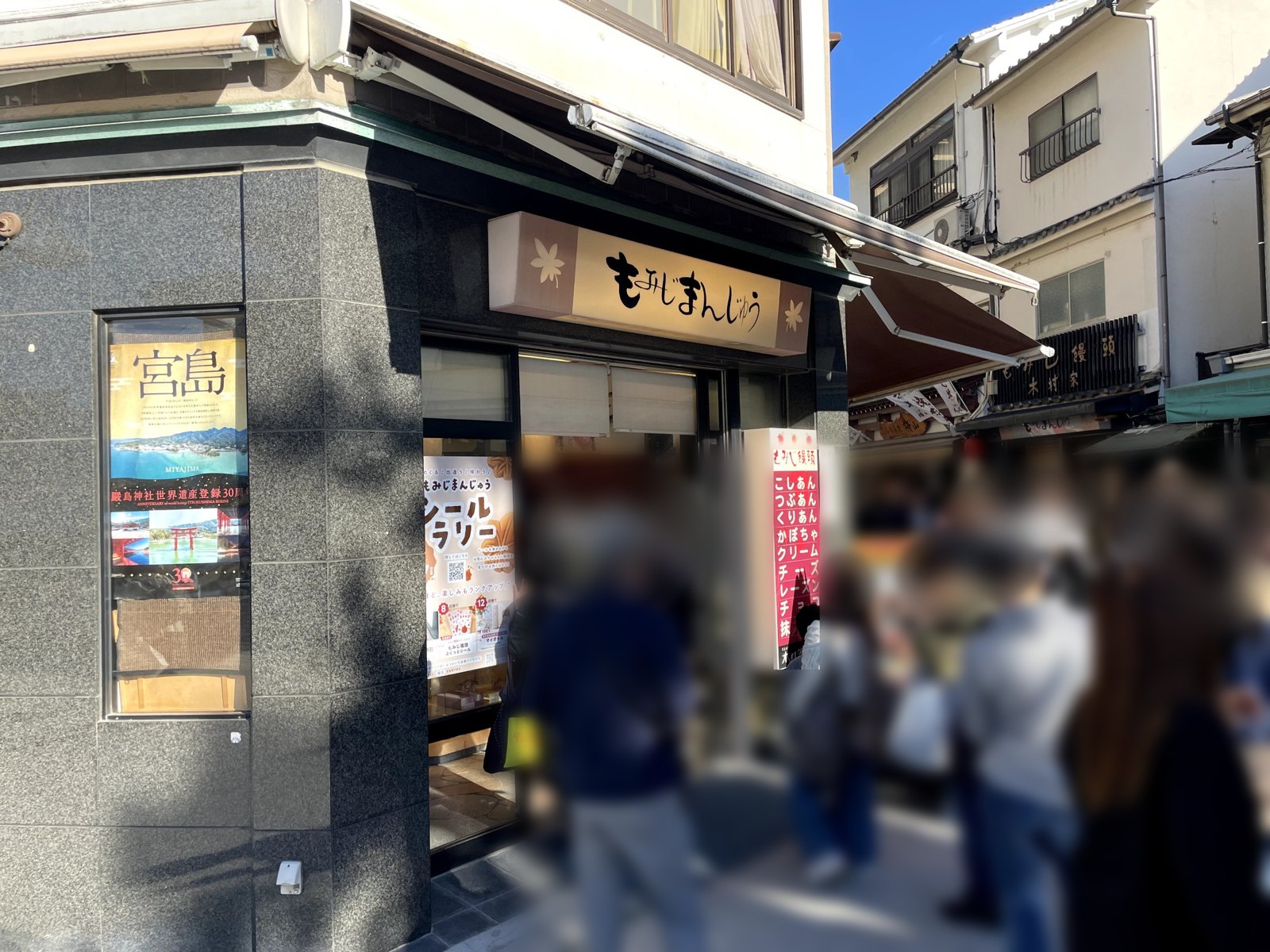
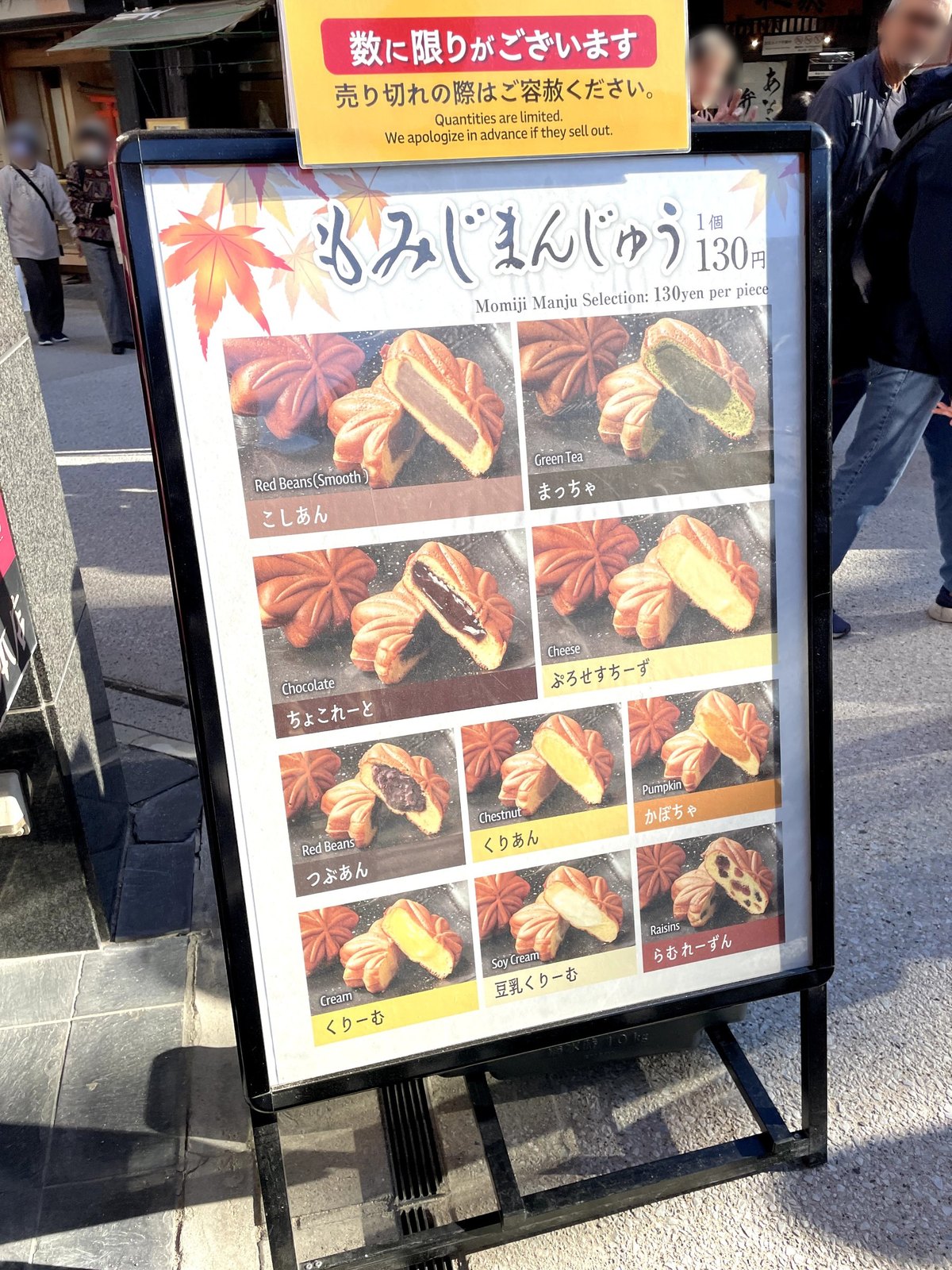
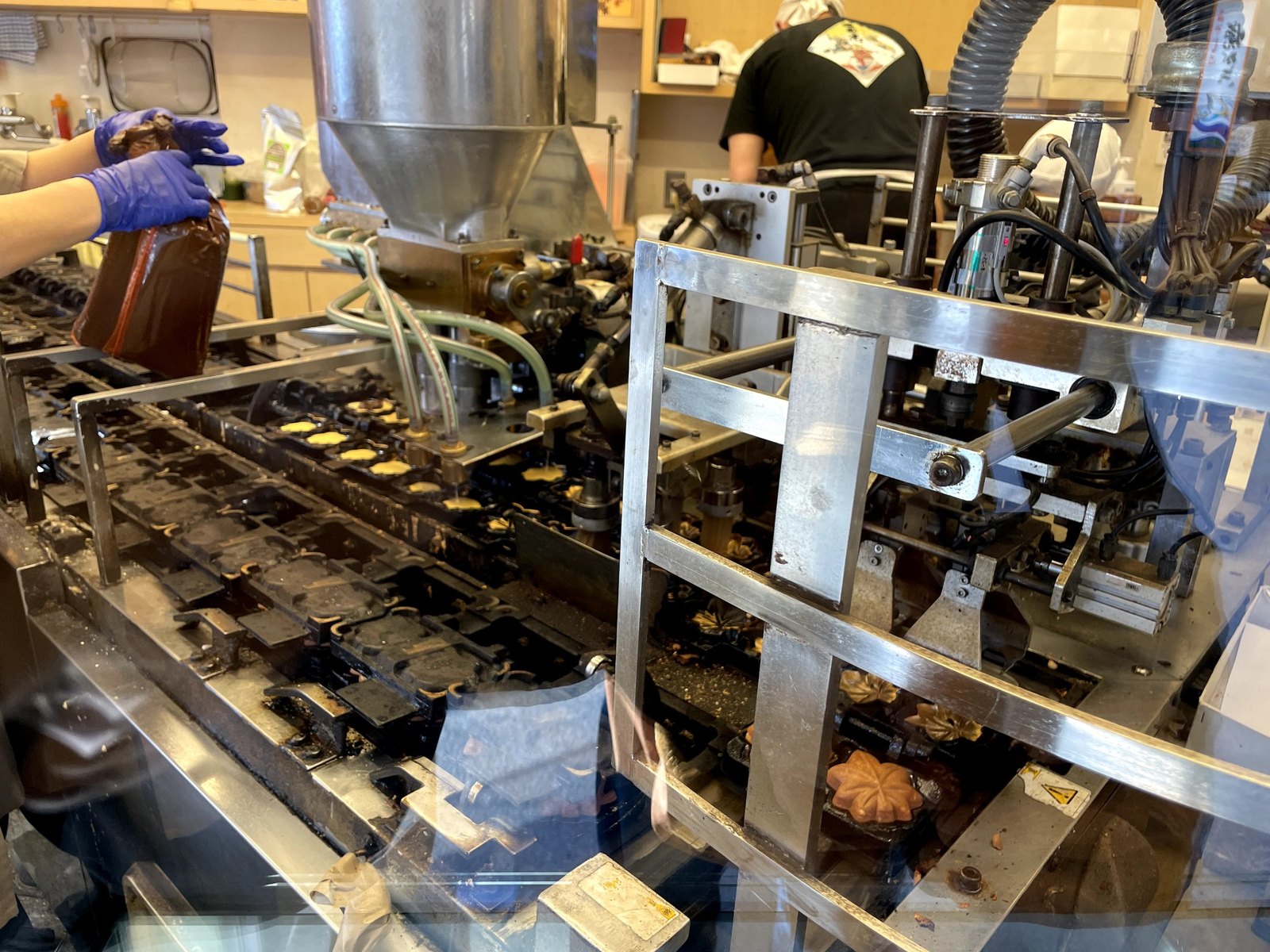
If you want to know more about momiji manju, see my post on Nishikido near Hiroshima Station.
More Miyajima
If you have more time on the island, you can also climb the island’s mountain: Hiking Mt. Misen on Miyajima: Walk Up, Ropeway Down. For autumn color around Hiroshima, see Autumn Leaves in Hiroshima.
If you visit Miyajima in autumn, I recommend timing your trip for the ginkgo season. The yellow leaves seen from inside this old wooden hall were beautiful.