Shukkeien Garden: A 400-Year-Old Garden in Central Hiroshima
日本語版はこちら → https://ao-happy.net/shukkeien-garden-hiroshima-ja/
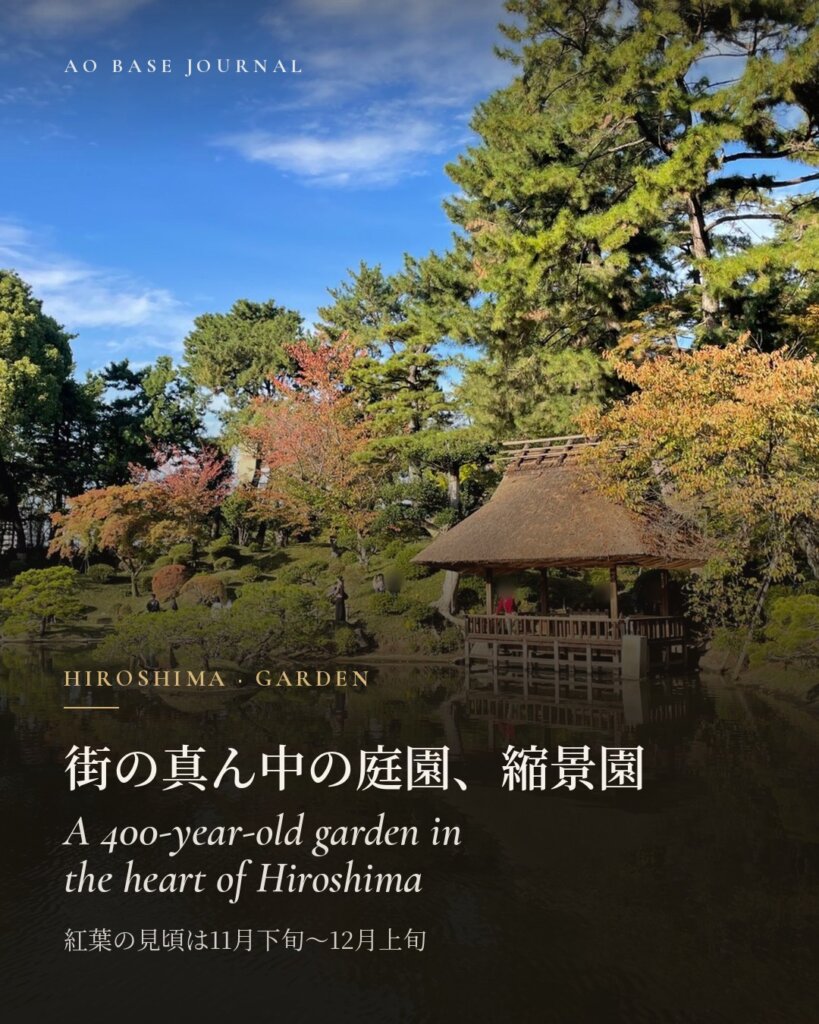
Within walking distance of Hiroshima Station, in among the city’s buildings, there is a pond garden that dates from 1620. We went to Shukkeien as a family on November 3. It struck us as a good place to show visitors from abroad the beauty of Japan and how its seasons change.

If you are spending a day at Peace Memorial Park, this is where we would suggest going afterwards, when you want some quiet time. The garden has its own connection to 1945, and we come back to that below.
A whole landscape in one garden
Shukkeien was built in 1620 by Ueda Soko, a tea master and senior retainer of the Asano family, who ruled Hiroshima. The name suggests a condensed landscape: mountains, rivers and valleys brought together so you can walk through them in a short time. One long-told explanation is that the design shrinks the scenery of West Lake in Hangzhou, China.
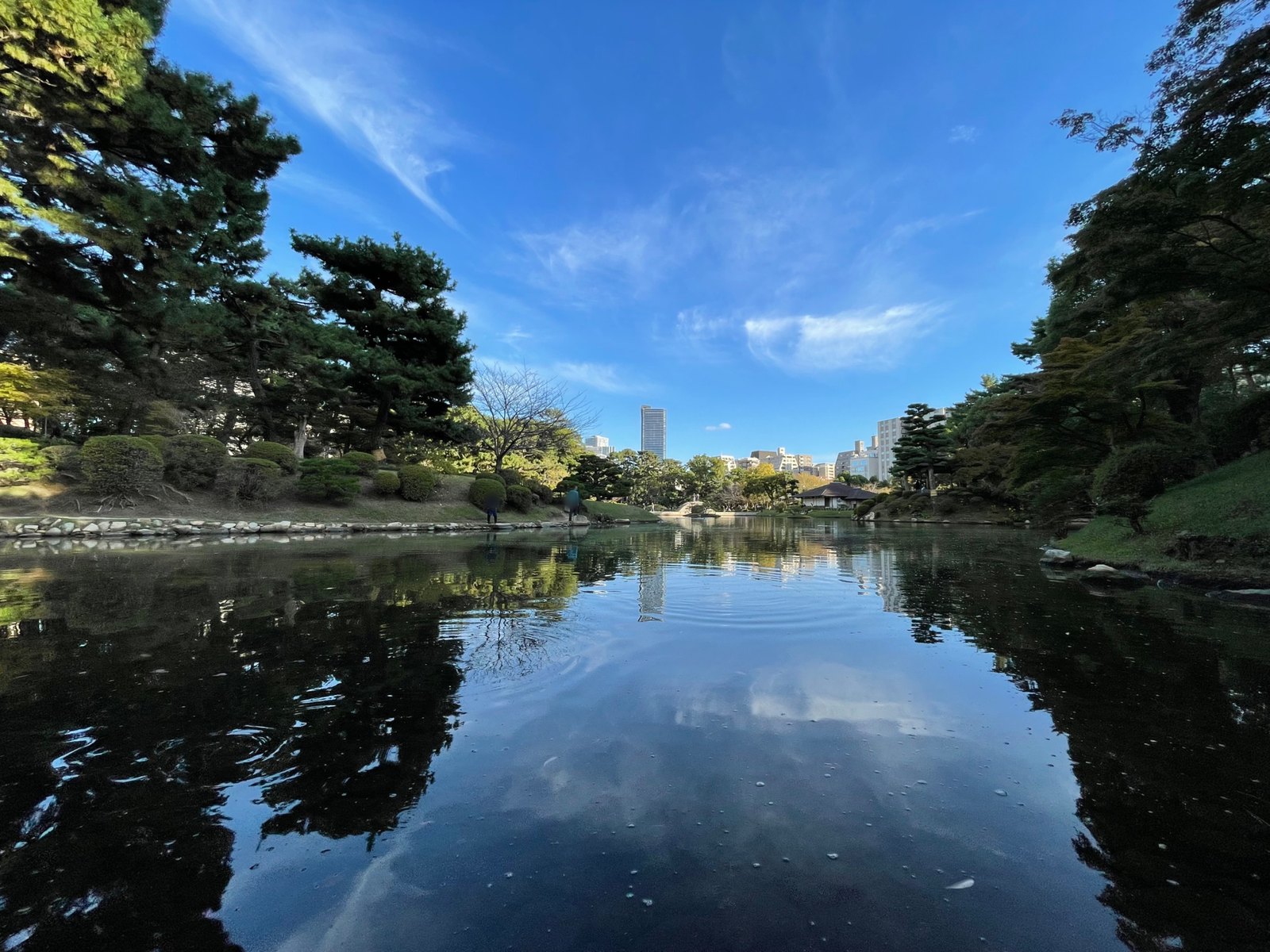
The garden is laid out for strolling around a central pond called Takuei-chi. Its small and large islands are said to evoke the Seto Inland Sea, and bridges, teahouses and arbors line the paths.
The atomic bombing of 1945 destroyed almost every structure here. The stone arch bridge, Koko-kyo, survived, and so did a few trees, including a great ginkgo and a tall black pine. The buildings were rebuilt after the war and the garden was restored over the following decades. A memorial near the river remembers victims who were buried in makeshift graves in the garden.
What we liked walking around
Sitting and looking at the pond
Our favorite part was simply sitting under a roof and watching the pond. There are rest spots here and there around the garden, so you can walk a little, sit down, then keep going.
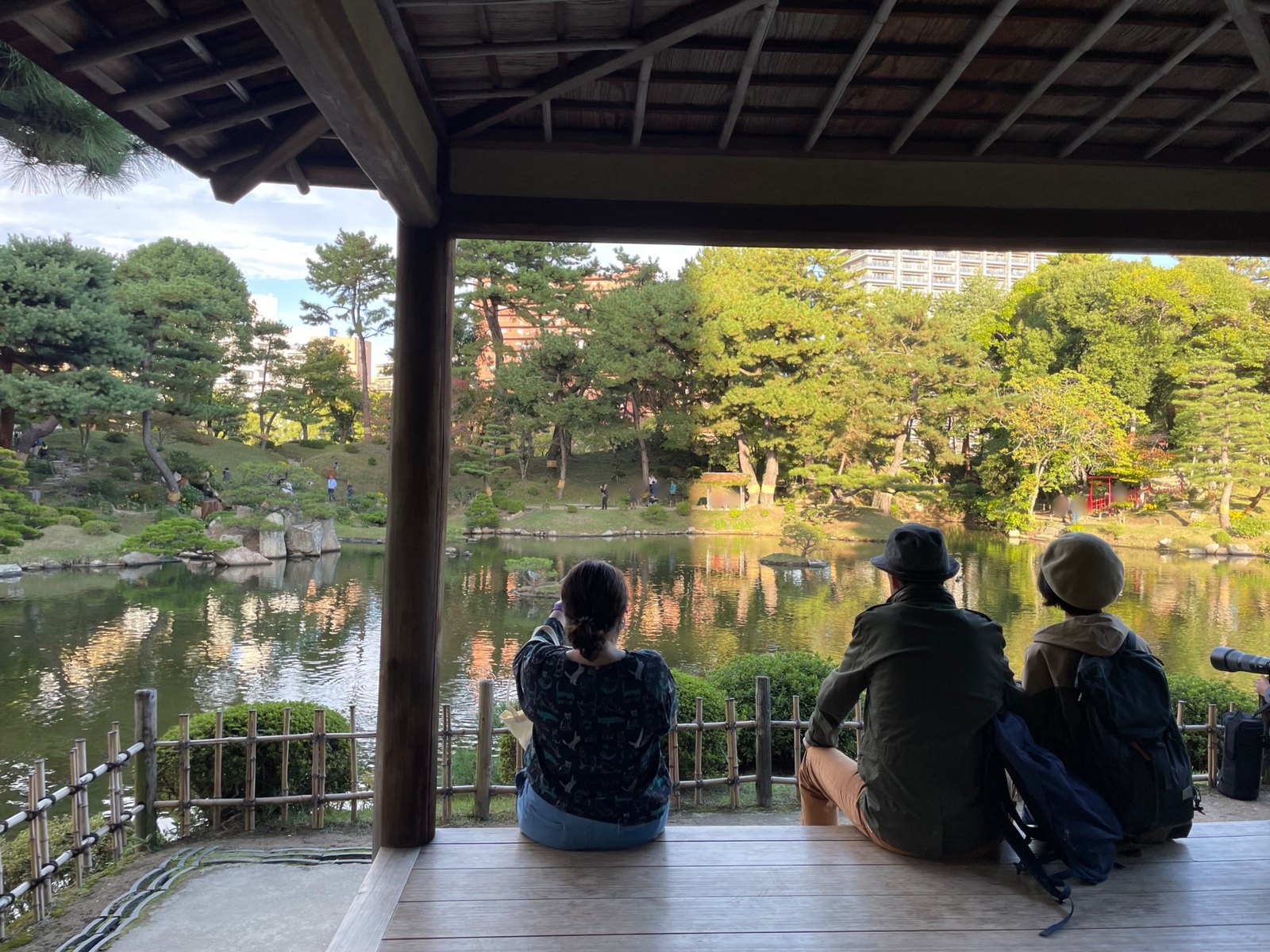
Yuyu-tei, the thatched pavilion
Yuyu-tei stands at the edge of the water and seems to float on it. It was used for poetry gatherings and summer tea. On a still day, the thatch and the trees behind it double in the pond.
Bridges and shoreline paths
There is a bright red bridge, and narrow wooden bridges along the water. The official site warns that the slope of Koko-kyo, the stone arch bridge, can be slippery, so take care there.
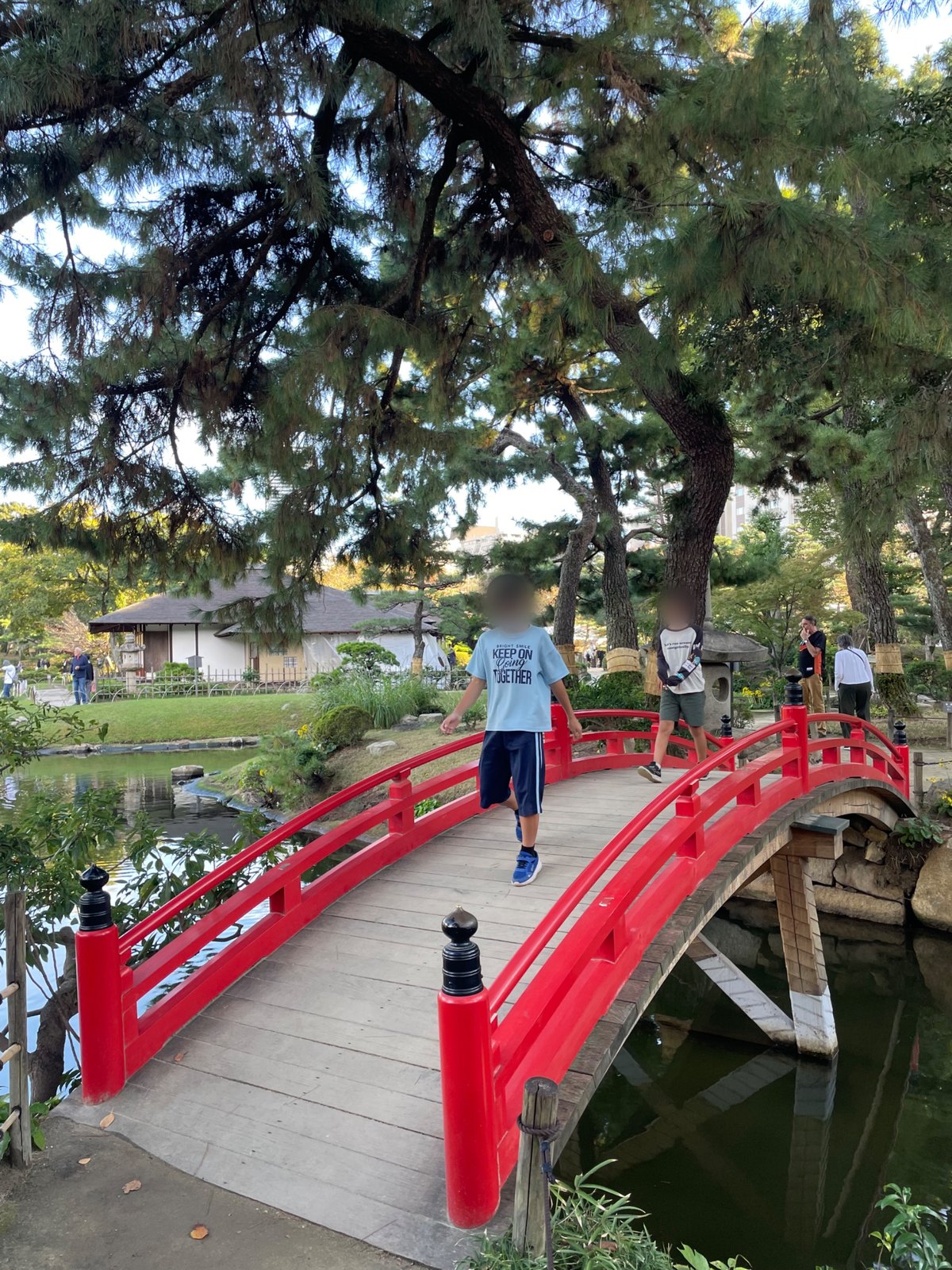
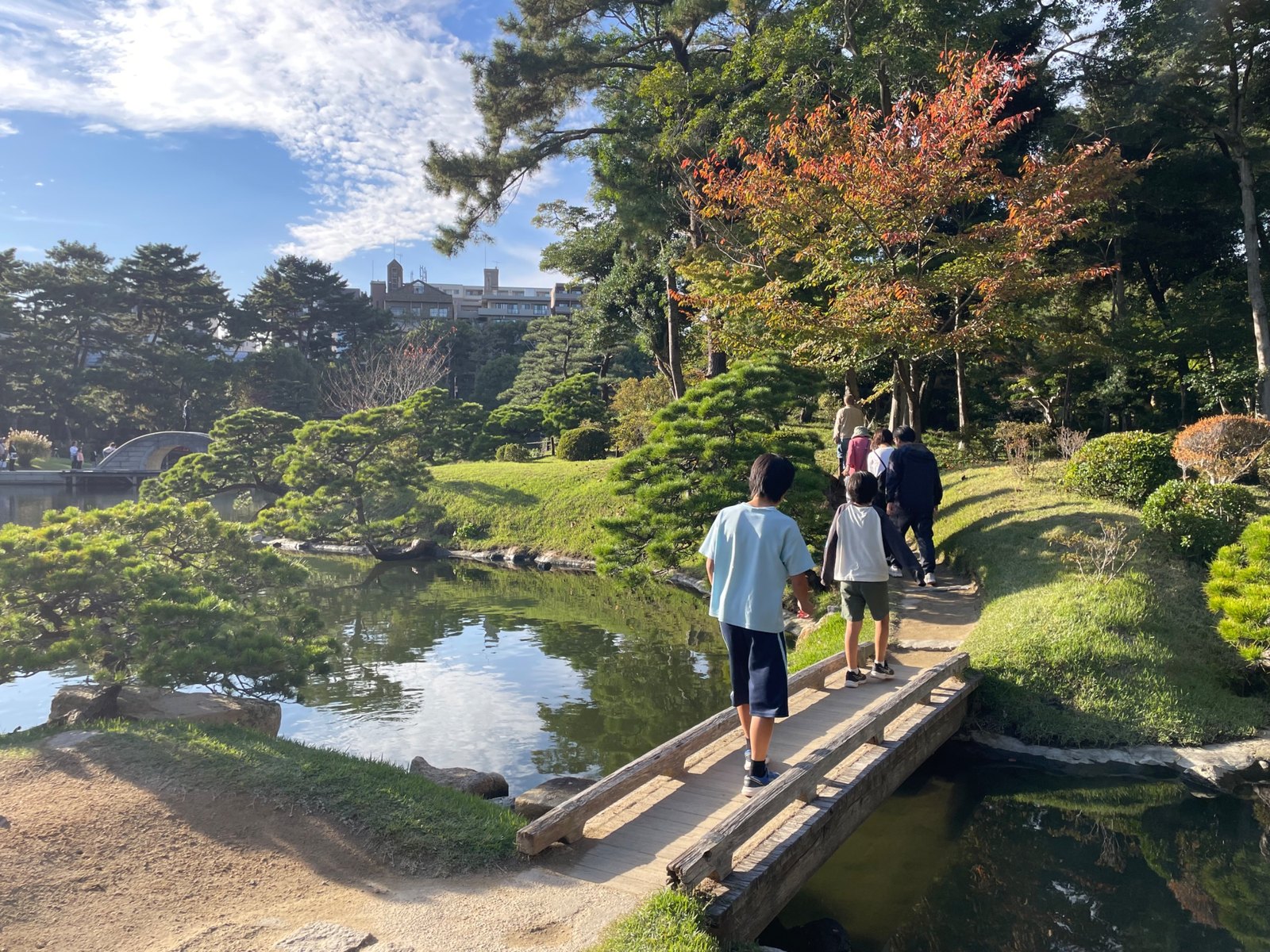
We stayed about an hour with our children. Adults on their own could take it much more slowly.
When to see the autumn leaves
On November 3 the maples were still mostly green, with color only on some trees around the pond. They should look beautiful when the season arrives. The garden’s seasonal guide lists autumn leaves from late November to early December, and a 2026 forecast from Weathernews put the peak from around November 23. Colors shift from year to year, so check close to your trip.
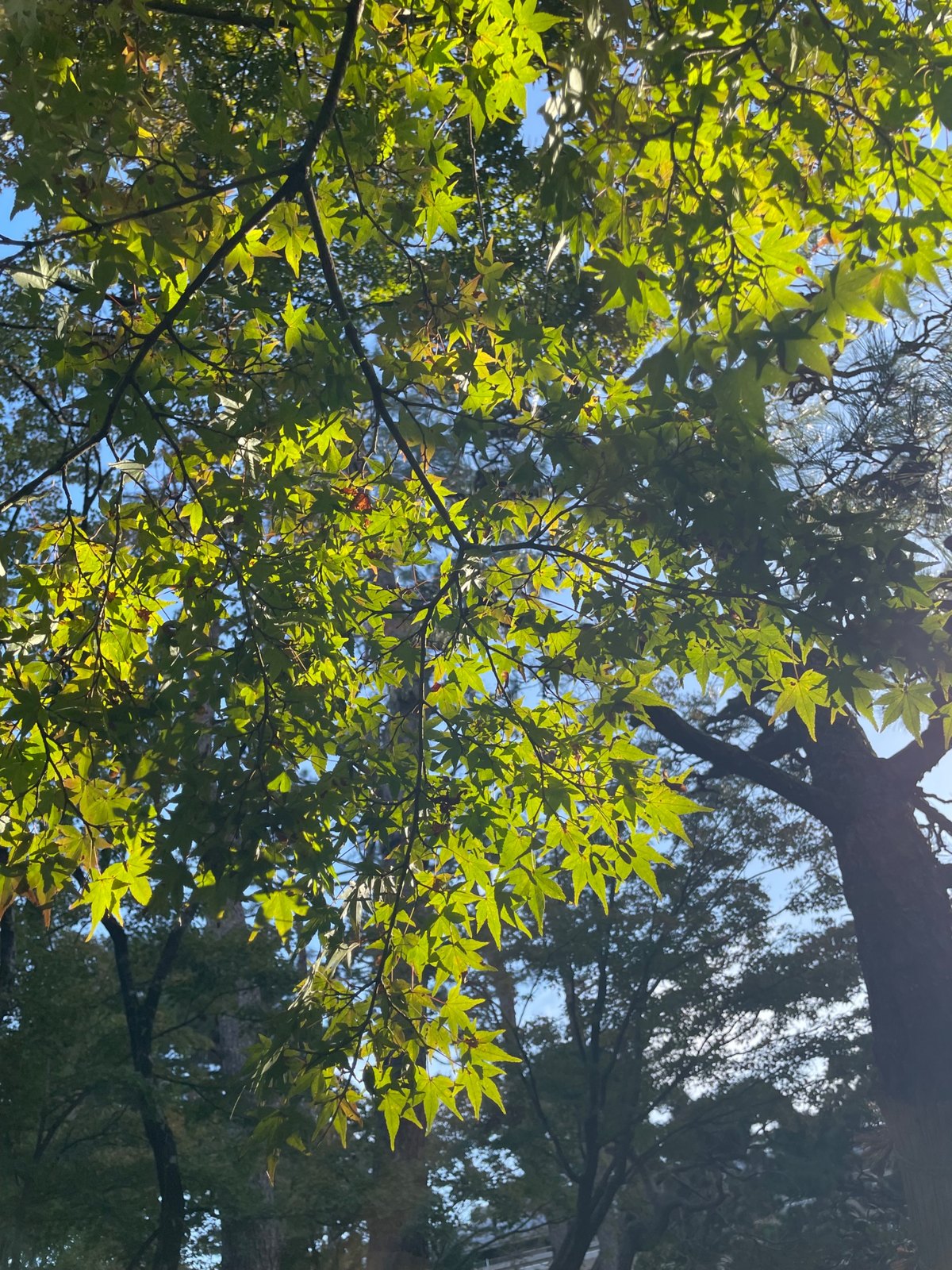
For 2026, the official event list shows the Momiji Festival with evening light-ups from November 20 to 29. The 2025 festival ran from about 5 pm to 9 pm with last entry at 8:30 pm, so check the 2026 times before you go. For other places to see the leaves, see our Hiroshima autumn leaves guide.
Tea at the garden
On the day we visited there was an outdoor tea event, with a red parasol and red mats on the lawn. The official list shows a chrysanthemum-viewing tea gathering on November 3. Further tea gatherings are listed for November 15 and December 6, and the ones we found all fall on Sundays or holidays. We can’t say whether anything runs on ordinary weekdays, and the list doesn’t give fees, so check the event list or call the garden first.
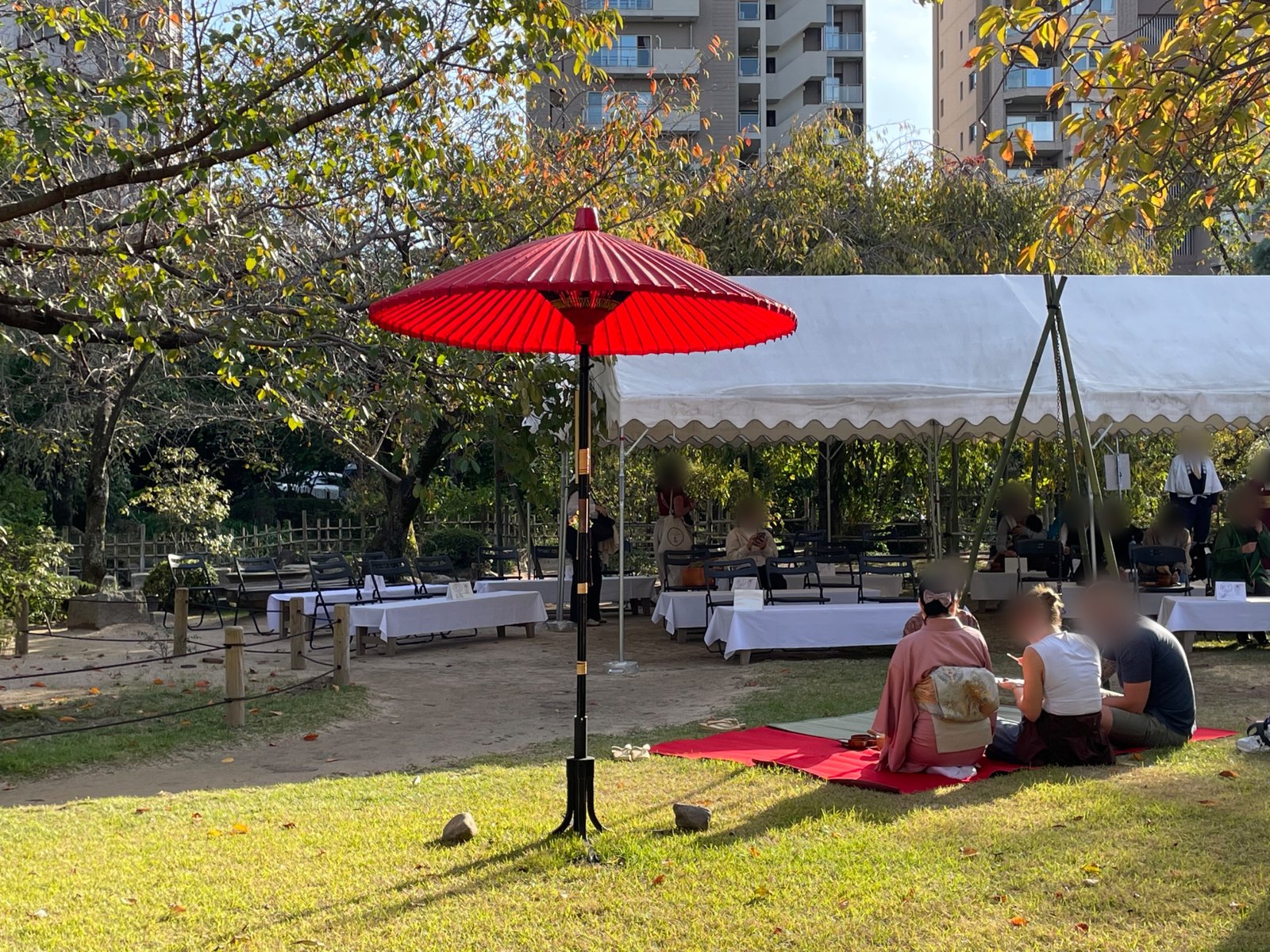
Outside of events, the Sensuitei rest house on the left after the entrance sells light meals and sweets, including a matcha set. The menu changes with the season.
The art museum next door
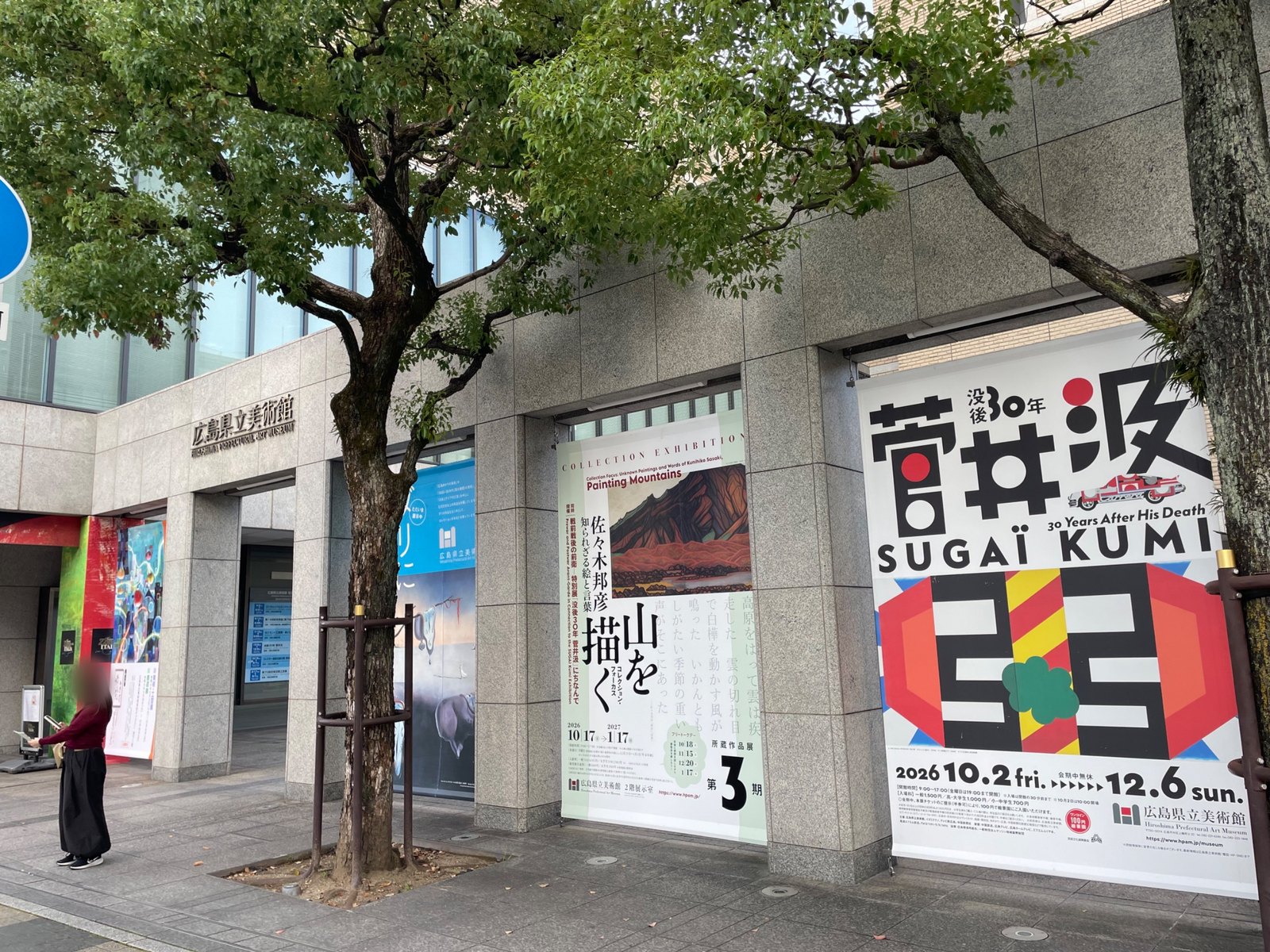
The Hiroshima Prefectural Art Museum is right beside the garden, so it’s easy to add if you have time. The garden offers a combined ticket. Check the museum site for current exhibitions and opening days.
Visiting information
| Item | Details |
|---|---|
| Hours | Sep 16 to Mar 15: 9:00 to 17:00 (last entry 16:30) Mar 16 to Sep 15: 9:00 to 18:00 (last entry 17:30) |
| Closed | December 29 to 31 |
| Admission | General ¥350, university students ¥150 High school students and younger, and age 65 and over: free (bring ID showing your age) With the art museum: general ¥660, university students ¥350 |
| Free days | May 4 (Greenery Day) and November 3 (Culture Day) |
| Address | 2-11 Kaminobori-cho, Naka-ku, Hiroshima |
| Phone | 082-221-3620 |
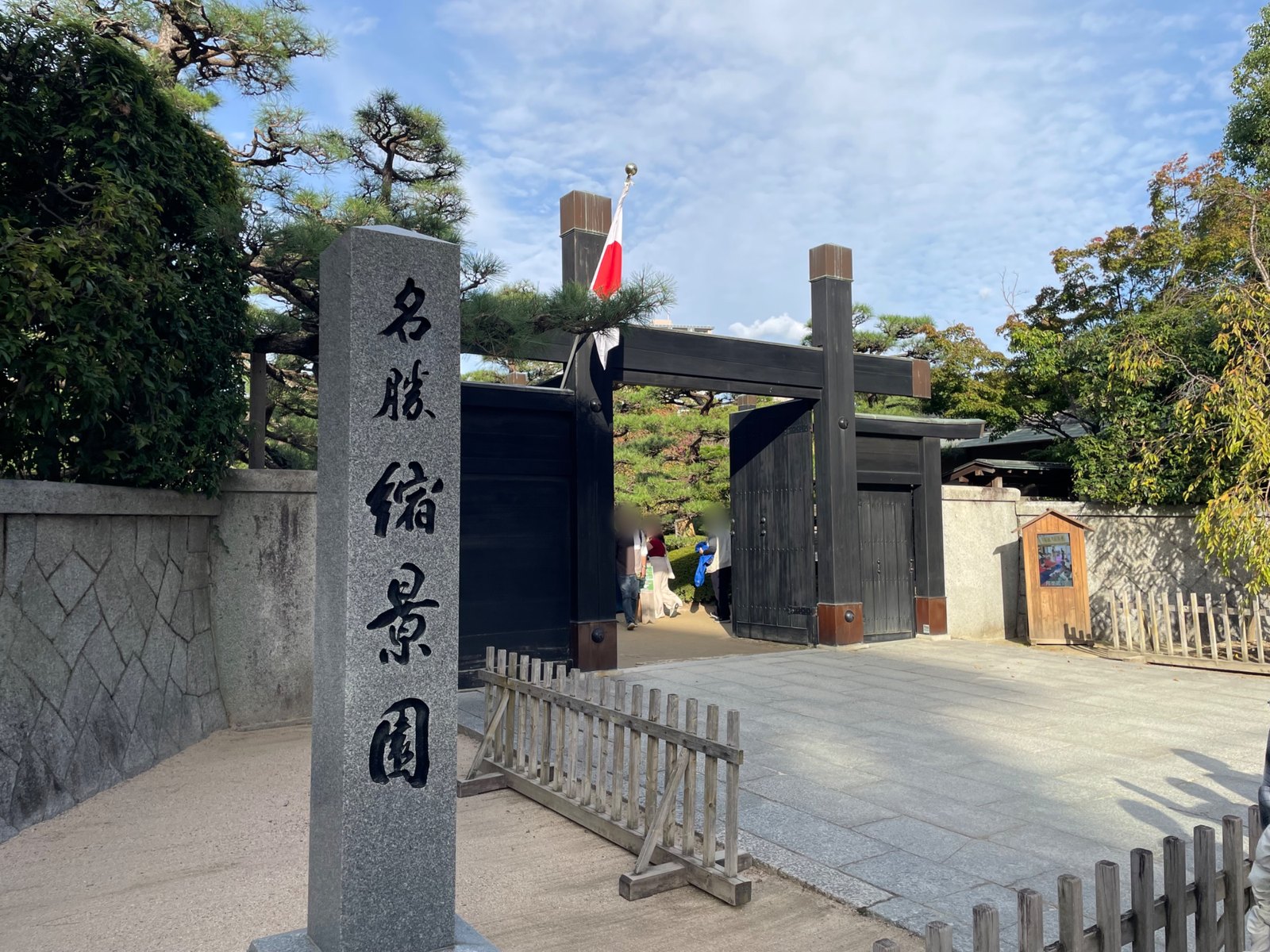
Fees and hours are from the official guide page. Food is only allowed at the tables under the wisteria trellis on the museum’s front lawn. Pets, alcohol and drones are not allowed inside.
Getting there
| From | How | Approx. time |
|---|---|---|
| Hiroshima Station | Walk | 10 to 16 min (sources vary) |
| Hiroshima Station (Shinkansen exit) | Loop bus Meipuru-pu, Orange or Lemon route, to Prefectural Art Museum (Shukkeien) stop; some buses skip this stop, so check before boarding | About 4 min, plus 3 min walk |
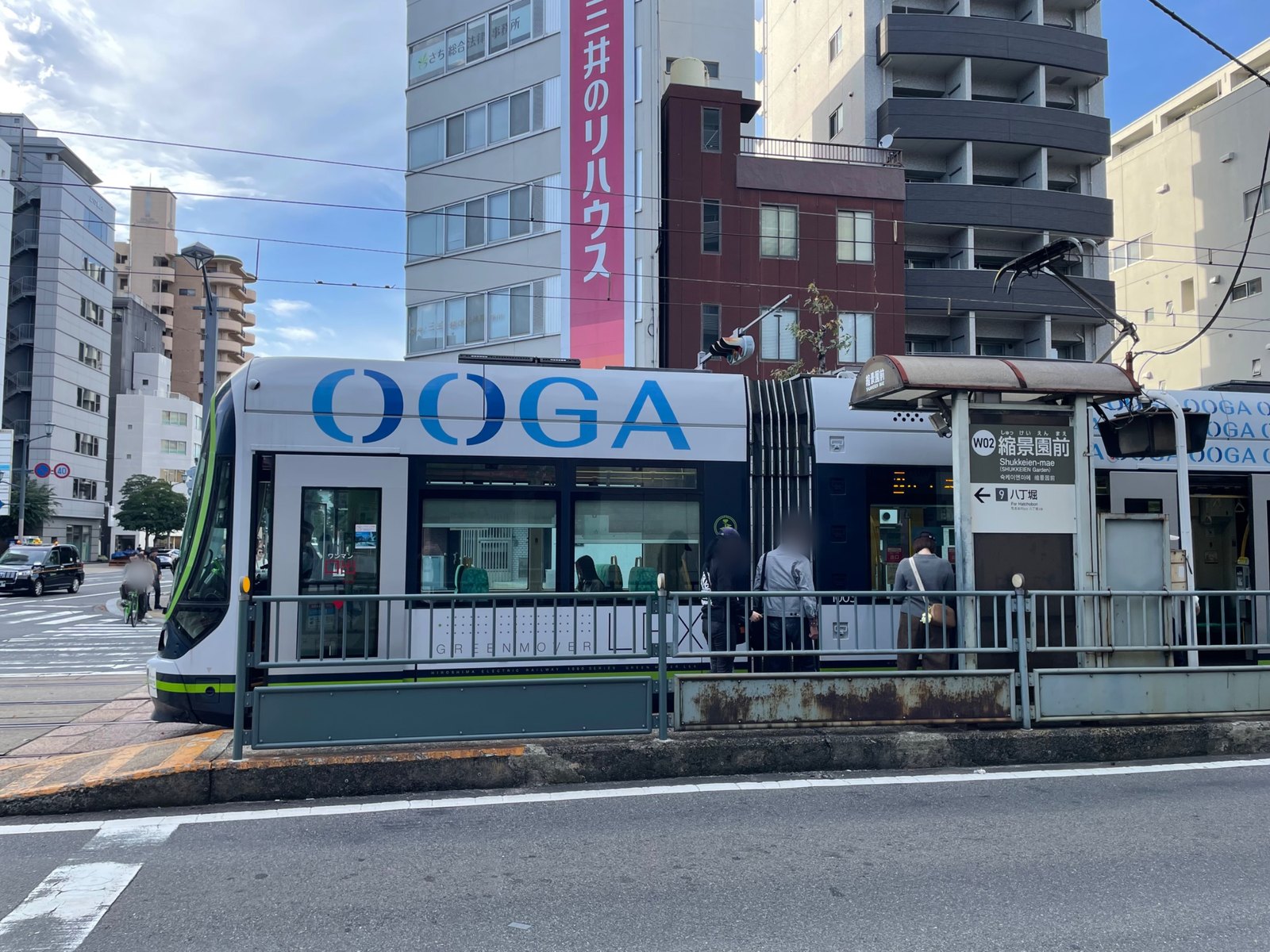
| Hiroshima Station | Tram to Hatchobori, change to the Hakushima Line, two stops to Shukkeien-mae | About 13 min to Hatchobori, then a few more minutes, plus 1 to 2 min walk |
| Peace Memorial Park area | Tram from Genbaku Dome-mae to Hatchobori, change to the Hakushima Line, two stops to Shukkeien-mae | Plus 1 to 2 min walk |
Parking is limited, so the garden asks visitors to use public transport where possible. If you are staying with us, here is roughly how long it takes:
| From | Route | Approx. time |
|---|---|---|
| Ao’s Retreat Base (Ushita) | Walk 22 min to Hakushima tram stop, tram a few minutes to Shukkeien-mae, walk 2 min | About 30 min |
| Ao’s Retreat Base (Ushita) | Walk 6 min to Ushita-minami stop, bus No.5 for 12 min to Hiroshima Station, walk about 15 min | About 35 min |
| Ao’s Skyview Base (Koi) | Walk 5 min to JR Nishi-Hiroshima, JR 6 min to Shin-Hakushima, walk about 8 min to Hakushima tram stop, tram a few minutes, walk 2 min | About 25 to 30 min |